


The hardest part of a long trip? Coming home.
- Brett
- Apr 5, 2019
- 5 min read


Since returning to Portland I’ve been notably neglectful of this blog. On one hand this is entirely logical. Instead of spending my time creating “vacation envy” and convincing the world’s budget airlines to let me into their cabin with a modestly sized yet shockingly heavy backpack, I have spent the past few months wearing a sweat suit that would make George Costanza proud, perusing LinkedIn, and finding ways to avoid writing cover letters. These are not exactly the activities that inspire me to sit down and crank out a post.
I had grand ambitions plans to use at least some of my time being unemployed in the bleak winter landscape of the Pacific Northwest to add content to and spruce up this blog. In fact, working on this was going to be one of my primary cover letter avoidance strategies. Yet every time I opened my computer I couldn’t get myself to type out (and edit) a complete post. I’ve come to realize the reason for this is also related to my answer to one of the common questions I been asked since I got back to Portland: what was the hardest part of your trip? It turns out it was coming home.
There is a phenomenon that explains at least part what I experienced. It’s called Reverse Culture Shock, and it’s fairly well acknowledged by experts of whatever field it is one studies to become an expert in something like this. I listened to a podcast all about it in SE Asia and fully expected to encounter it once I arrived back in the United States. The premise is that if you leave your home country for an extended period of time, when you return you see life differently. Symptoms of Reverse Culture Shock are not universal but most people returning from a prolonged stint abroad grow critical of life in their home country, think longingly back at where they just were, and are prone to exhaustion and depression. The State Department has put together this useful primer on the concept. I know, I’m shocked too that the US State Department still has useful web content. This page must be a relic of the Obama Administration and the current state department employees are so understaffed that they haven’t had time to take it down. Yet.
Political digression aside, for me Reverse Culture Shock was only part of the equation. As I look back on the past few months I realize the most challenging part of coming home was not being re-confronted with all of the aspects of American society I had stepped away from; though I continue to be baffled by the sheer number of products available to me when I walk into a grocery store. Instead, it was that I found myself staring directly at the future. For the first time since I came up with my plan to go on this trip a year ago and some change, aside from the very rough sketch I had put together for myself from a variety of places around the globe, I didn’t have a coherent vision of what I wanted my future to look like.
It was like looking at a map without an idea of where to go next. The potential destinations were endless. I knew I needed to head in a direction but was feeling indecisive. I was back in Portland, but not living in my house, and the life I had lived before my trip, with a mostly rewarding job and full social calendar, was not what I came back to. I slipped into a bit of a funk. I slept a lot, re-acquainted myself with Netflix and Amazon Instant Video, slowly unpacked a few boxes in my temporary space, and made plans to catch up with people. Moodier than usual, I expressed my frustration by napping and typing a few angry emails to people who incited my frustration. I was trying to allow myself a few weeks to feel lost and re-orient.
Fortunately it didn’t take too long for me to return to my normal disposition of sunny with a healthy dose of skepticism. In case you’ve already forgotten, there was a midterm election last fall and I had two graduate school classmates running for seats in the Washington State Senate. With ample time on my hands I decided to take quick trips to visit and volunteer for each of their campaigns. It was also a fairly mild fall in the Portland area which made for pleasant mid-week excursions on trails close to town. I gave myself space to feel a bit down but also found that these activities provided me with structure and motivation. I reconnected with a few former co-workers, most of whom had scattered to different companies since I left, and started my job search.


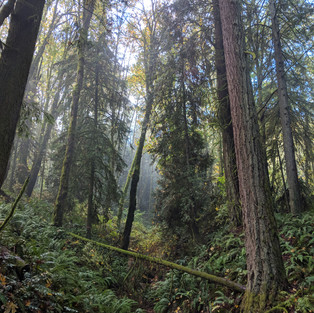


I decided I wanted to stay in Portland, realized that this search would be my focus for the next few months. Once I found a place that would allow me replenish my savings I could think about the other parts of my life. Shortly after returning from a trip to California for Thanksgiving, about a month and half after I finished my trip, I started to feel like there could be an exciting destination ahead for me. It took a few more months to find a job which was its own emotional rollercoaster. I am glad I had given myself time to work through Reverse Culture Shock before sending out resumes in earnest, it seems foolish to send an angry emails to recruiters. Now that I am about to go back to work I am looking forward to picking destinations and trying to blaze a trail for other aspects of my life.
While I expected coming home to be difficult, when I boarded my flight to Phnom Penh just over a year ago I didn’t think returning home would prove to be more challenging than anything I encountered on the road. Perhaps it would have been easier if I had a job waiting for me or if I had come up with a project or hobby with more intrinsic motivation than blogging to occupy some of my time during the job hunt. Now that I’m on the other side of the re-entry tunnel this all makes sense to me though. Despite how rewarding it has been to reconnect with friends and family, hopping from one foreign locale to the next is just more exciting than being stationary. I’ve learned that there’s more to life than excitement though and have decided it is time to try to experience some of those things for awhile.


Comments