


I wanted to know more about the Hmong...
- Brett
- May 12, 2018
- 4 min read

Updated: Apr 6, 2019

For those of you who follow my trip on the social medias, you’ll know that about ten days ago I spent a night at a homestay at a Hmong family in Sa Pa, Vietnam. I followed a Sung, woman I met at a bus station, which was less sketchy than it sounds, trekking over a mountain and through rice terraces about 10 kilometers to a village that was definitely cashing in on its proximity to the Banana Pancake Trail. Pretty much all the other residents were hosting westerners and I’m sure life for these Hmong was very different than it was a decade ago when the only game in town was subsistence agriculture.
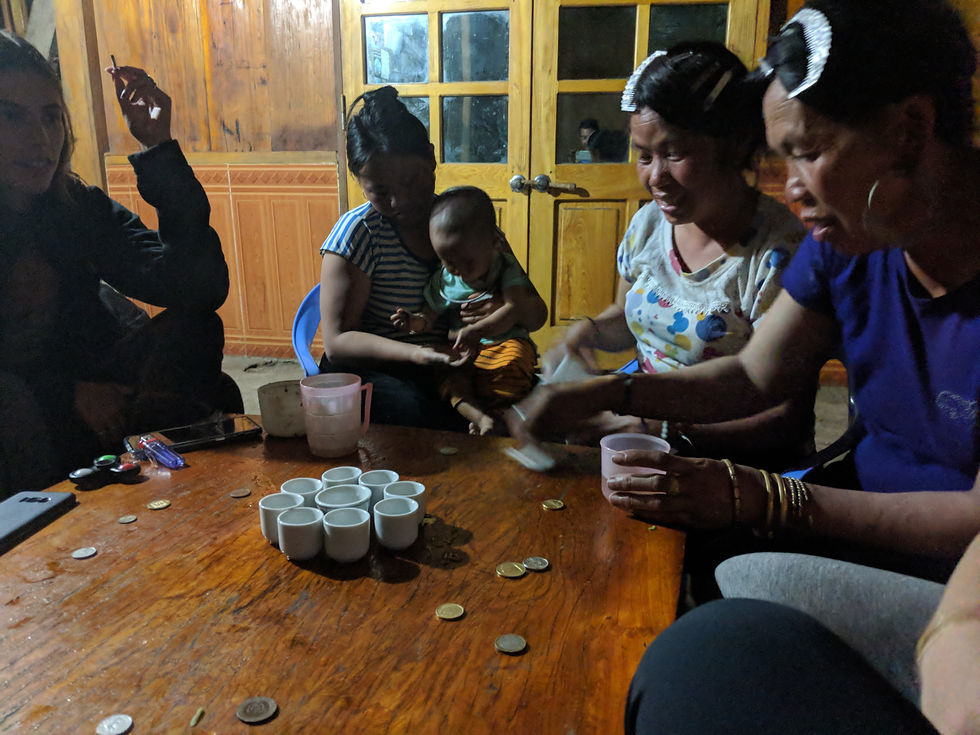
I joined a young Israeli couple and a French uncle and niece and stayed at Sung’s grandma’s house which had beds for about 10 people. It was a bit more plush than I imagined and boasted a warm shower, sit down flush toilet, and wifi. That night we ate a delicious meal and played the Vietnamese version of the drinking game quarters where you drink happy water, a distilled rice wine kind of like sake, instead of beer. Also because the Vietnamese currency which, appealing to my juvenile sense of humor is called the Dong, doesn’t use any coins, we played with an assortment of coins from around the world which all have different bounce behaviors. After trying a few I settled on the quarter from the USA since I’m familiar with how it handles. Our three Hmong hosts were by far the most skilled both at drinking the happy water and at getting coins into cups.
This whole experience, coupled with a book I read set in Laos featuring the Hmong by Colin Cotrell, made me curious to learn more about the Hmong. I pulled up the Wikipedia page. Another book I’m reading, Christopher Robbins’ The Ravens, about the Secret War the CIA waged in Laos (and Cambodia) at the same time the US military fighting in Vietnam, has a chapter about Hmong people in Laos. What follows is a brief summary of what I have learned.
The Hmong are also known as the Miao indigenous people who originally came from and mostly live in southern China. In the 18th century some began migrating to SE Asia, where they settled in the highlands, clearing forested areas for agriculture. For cultivating rice, this requires creating those terraces that look stunning in many photos but just mildly of cool in mine because the fields were recently planted. Particularly in Laos Hmong have grown opium though there are efforts underway to switch out these fields for other cash crops like coffee instead. Still, this is why the area between Laos, Myanmar/Burma and Northern Thailand known as the Golden Triangle, is infamous for drug trafficking. Robbins notes that Hmong farmers only see a fraction of the money made in the opium trade. Unlike the majority of Laotians and to a lesser extent Vietnamese people who are Buddhist, Hmong are Animists, and they speak their own language. As a result that have been subjected to persecution in both countries.
The Hmong played a significant role helping the Americans fighting the Communist Pathet Lao and Viet Minh in the Laotian Secret War. By the time the Vietnam War was going full bore the Viet Minh were using Laos for the Ho Chi Minh Trail, the route they used to get weapons and guerrillas from North Vietnam to resistance fighters in the South. Americans, led by the CIA were trying to disrupt these troops and supplies as well as crush the Pathet Lao unleashing a huge bombing campaign. The Laotian General fighting with the CIA, one Vang Pao, was Hmong and recruited many of his people to help in the war effort. By the end of the Secret War essentially an entire generation of Hmong men in Laos died. From what I have read in The Ravens, the Hmong soldiers were fearless fighters even though they have traditionally been peaceful agrarians.
When the war in Laos ended and the Americans retreated, Laotian Hmong were, and still are, targeted by the Pathet Lao government. While almost 500,000 Hmong still live in Laos, Wikipedia estimates that 116,000 fled to Thailand. There are also 100,000 Hmong people who sought refuge in the United States, which has the largest Hmong population outside of Asia. Many were settled in communities in Wisconsin and Oklahoma which I can tell you are not at all like Laos. As an aside the United States has the largest Vietnamese, Cambodian, and Laotian populations outside of Asia and many refugees from the region were given amnesty in the United States as we pulled out.
There you have it, a little bit of extra information about the Hmong, though I am not sure how much of this is relevant to the family I stayed with in Vietnam. They seemed more interested in hosting, having fun with, and making money from Western tourists while also growing food and showing off their traditional weaving skills than growing opium, fighting a war, or even following animistic shamanic religious rituals. Still, I am glad I pulled up the Wikipedia page and know more about the ethnic group at a macro level.


Thanks Linda! My mom recommended the same book to me after reading this post! Glad you're enjoying the blog. Hopefully surfing is not so tiring for me that I'll have the energy to write a post or two in the next few weeks...
Just read the Hmong installment. What a great experience! The Ravens sounds like an interesting read. I also recommend The Spirit Catches You And You Fall Down— about Hmong who settle in Fresno. Love following you on your trip through this blog! Xxxx Linda